
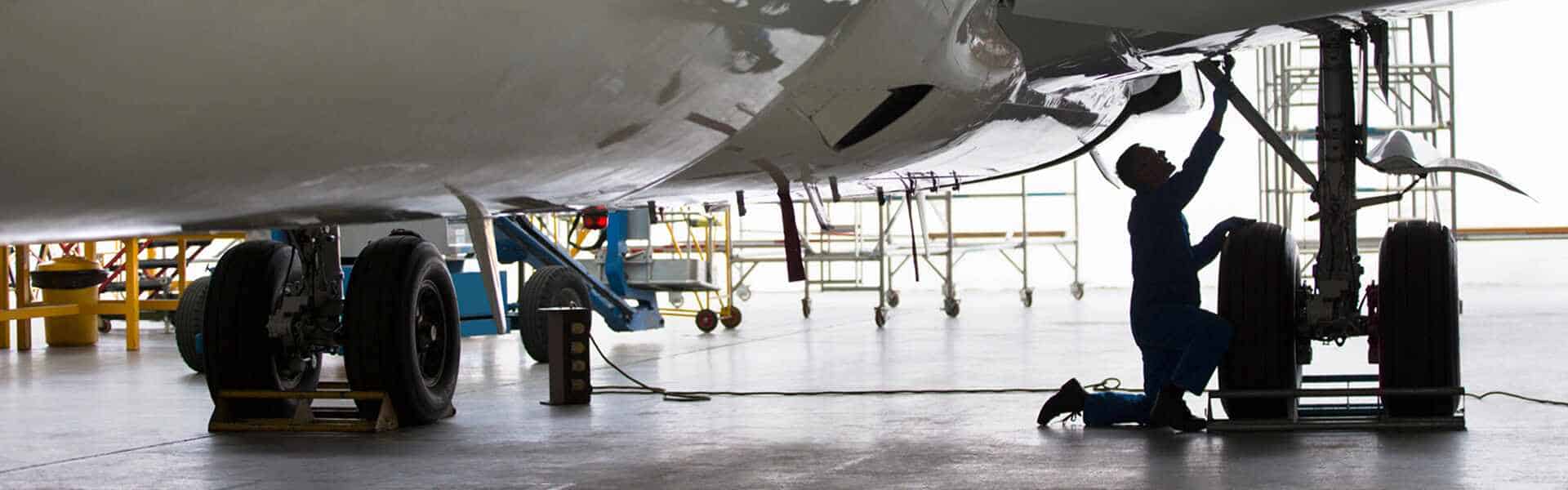
A hangar bay that sits empty for eight months of the year still costs money every single day. The lease, the tooling, the salaries, the training budget. None of it pauses because the fleet happens to be flying.
That is the uncomfortable maths behind one of the biggest decisions an airline or operator faces: keep maintenance in-house, or hand it to a third party. It is a different question from whether to outsource dispatch and flight operations, which we covered in our guide to flight operations. Maintenance has its own economics, its own regulatory weight and its own risks.
Outsourcing aircraft maintenance is not automatically cheaper, and keeping it in-house is not automatically safer. Both assumptions fail often enough to be dangerous. What follows is a practical look at the decision points: cost, compliance and turnaround, and the situations where each model genuinely earns its keep.
Why the Maintenance Question Is Harder Than It Used to Be
The maintenance market of 2026 is not the one most fleet plans were written for.
Global MRO spending passed $136 billion in 2025, up 8% on the previous year, and is expected to approach $193 billion by the end of the decade. The industry calls it a super cycle. The average aircraft in the global fleet is now over 15 years old, and with more than 17,000 jets sitting in the order backlog, operators are flying older aircraft for longer. Older aircraft need more maintenance. More maintenance needs more people.
Those people are getting harder to find. The US alone faced a shortfall of around 17,800 certified mechanics in 2025, a gap forecast to reach 22,000 by 2027, while maintenance labour rates climb 5.5% to 6% every year. Roughly 41% of certified mechanics in the US are over 60, and the pipeline behind them is thin.
The result is pressure on every hangar slot and every engine shop in the world. Engine shop visits that historically took 30 to 60 days now routinely run to 120 days or more, with some airlines reporting turnarounds approaching 300 days. Whether you maintain in-house or outsource, capacity is tight. That makes the structural decision more important, not less.
What Outsourcing Aircraft Maintenance Actually Covers
Maintenance is not one activity. It breaks into four broad categories, and most operators treat them differently.
- Line maintenance: daily and transit checks, minor defect rectification
- Heavy maintenance: C and D checks, structural inspections, major modifications
- Engine maintenance: overhaul and shop visits
- Component maintenance: repair and replacement of individual parts and systems
Industry practice is fairly consistent: heavy airframe and engine work is widely sent to outside providers, while line maintenance mostly stays in-house, close to the operation where quick response matters most.
Between fully integrated and wholly outsourced sit the hybrid models most operators actually use. You might keep line maintenance and send heavy checks out. You might handle one fleet type internally and outsource a newer type until you build capability. There is no single correct configuration, only the one that fits your fleet.
The Case for Outsourcing
Cost Structure, Not Just Cost
The strongest argument is not that third party aircraft maintenance is cheaper per hour. It sometimes is, but that misses the point. Outsourcing converts what would be a capital expense, the money sunk into hangars, tooling and a maintenance organisation, into an operating expense: you pay for the service you use. For smaller and mid-sized operators, that removes an enormous barrier. No hangar lease. No specialist tooling. No training programme to fund.
The Utilisation Problem
Fixed costs only make sense if the facility stays busy. Many fleets cannot keep one busy. One former British Airways engineer has described how the airline’s 12-aircraft A380 fleet could only fill a heavy check bay for about four months a year, so major checks went to a specialist MRO in Asia, because there was no way to keep the workforce occupied the rest of the time. Airlines also face seasonal peaks, when every aircraft needs to be flying and none can be in the hangar. MROs can flex their staffing across many customers; an airline with an empty bay cannot easily reassign its mechanics.
Access to Scarce Skills
With technicians in short supply globally, specialist providers offer something increasingly valuable: capability you do not have to build. Established MRO providers bring decades of experience, advanced diagnostic equipment and OEM-certified processes, which matters most with specialised or new-generation aircraft. When Boeing forecasts the industry will need around 710,000 new maintenance technicians over the next 20 years, hiring your own is a long game not every operator can play.
The Case for Keeping It In-House
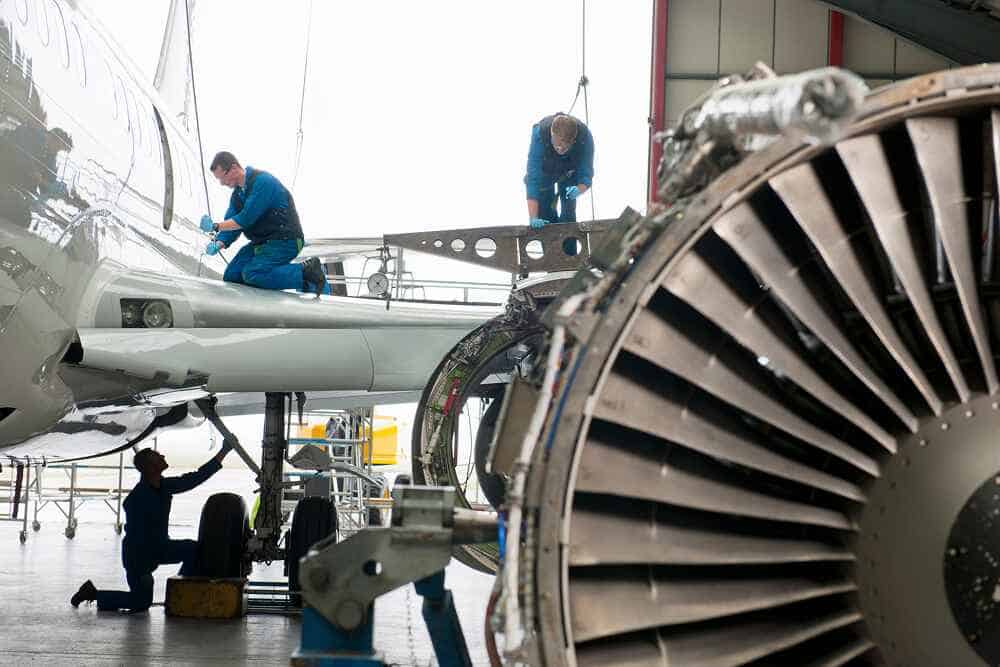 In-house maintenance earns its cost in control. Your own team can be mobilised immediately when an aircraft goes AOG, with no waiting for third-party availability, and processes can be tailored to fleets with unique modifications that an internal team understands best.
There is also the queue problem. An outsourced customer competes for slots with every other customer. In a market where engine turnarounds can run to 120 days or more, your place in someone else’s queue is a commercial risk in itself.
In-house works best for large, uniform fleets that can keep hangars and people productive year-round. If you operate 200 examples of one type, the economics look very different from a mixed fleet of twelve.
Compliance Does Not Get Outsourced
This is the point most often misunderstood. You can contract out the work. You cannot contract out the accountability.
Under EASA and UK CAA frameworks, the operator remains responsible for the continuing airworthiness of its aircraft, regardless of who turns the spanners. Outsourcing changes the shape of your compliance obligation rather than removing it: instead of managing mechanics, you manage a contract, audit a provider and verify their approvals cover your aircraft type and your regulatory jurisdiction.
The good news is that the safety concern is largely a myth. Research examining the period from 1996 to 2008 found no relationship between maintenance outsourcing rates and accident or incident rates, and maintenance-related accidents have declined even as outsourcing has increased. Reputable providers are certified under multiple aviation authorities and subject to rigorous, recurring audits. The risk is not outsourcing itself. The risk is outsourcing without oversight.
How to Decide
Strip the decision back to five questions.
- Fleet size and uniformity. Can your fleet keep an internal maintenance organisation busy all year, or would you be paying for empty bays?
- Capability fit. Do you have, or can you realistically hire, the skills your fleet needs? Be honest about the technician market.
- True cost comparison. Compare full costs, not labour rates. Include ferry positioning, downtime, training, tooling and the overhead of running a Part 145 organisation.
- Turnaround exposure. How much does an extra week of downtime cost you, and who controls the queue?
- Oversight capacity. Do you have the people to audit and manage a provider properly? If not, that gap needs fixing before any contract is signed.
For most operators the answer lands somewhere in the middle: line maintenance close to home, heavy and engine work with trusted partners, and rigorous oversight across all of it. Even airlines with their own hangars routinely outsource work above their baseline capacity, or contract out a new type until internal capability catches up.
Where Maintenance Strategy Meets Commercial Reality
The maintenance decision is never just an engineering question. It shapes your cost base, your dispatch reliability and your ability to grow. The market has made the trade-offs sharper: labour is scarce, turnarounds are long and fleets are ageing, which means the cost of getting the structure wrong has never been higher.
The principles are straightforward. Outsource where a partner’s scale, skills and utilisation beat yours. Keep in-house what your fleet size genuinely supports. And never confuse delegating the work with delegating the responsibility.
Maintenance planning also cannot sit in isolation from the rest of the operation. Scheduling checks around commercial demand, budgeting on predictable costs and keeping aircraft earning is exactly the thinking behind our commercial operations and management support, and our wider airline solutions. If you are weighing up how maintenance strategy fits into your operation, get in touch and talk it through with our team.
Frequently Asked Questions
Is outsourced aircraft maintenance as safe as in-house?
The evidence says yes, provided oversight is done properly. Studies have found no link between outsourcing rates and accident rates, and approved providers are audited under multiple regulatory regimes.
Who is responsible for airworthiness when maintenance is outsourced?
The operator, always. Regulators hold the operator accountable for continuing airworthiness regardless of who performs the work.
What maintenance do airlines usually keep in-house?
Line maintenance, most commonly. It sits close to daily operations and benefits from immediate response. Heavy checks and engine overhauls are the most frequently outsourced.
What hidden costs should I watch for when outsourcing?
Ferry positioning to the provider, downtime while waiting for slots, contract management overhead and any premium for AOG support. Compare total cost, not hourly rates.
How do I choose an MRO provider?
Check approvals for your aircraft type and jurisdiction, audit their quality organisation, ask about slot availability and turnaround performance, and prioritise providers who treat you as a long-term partner rather than a one-off job.
