
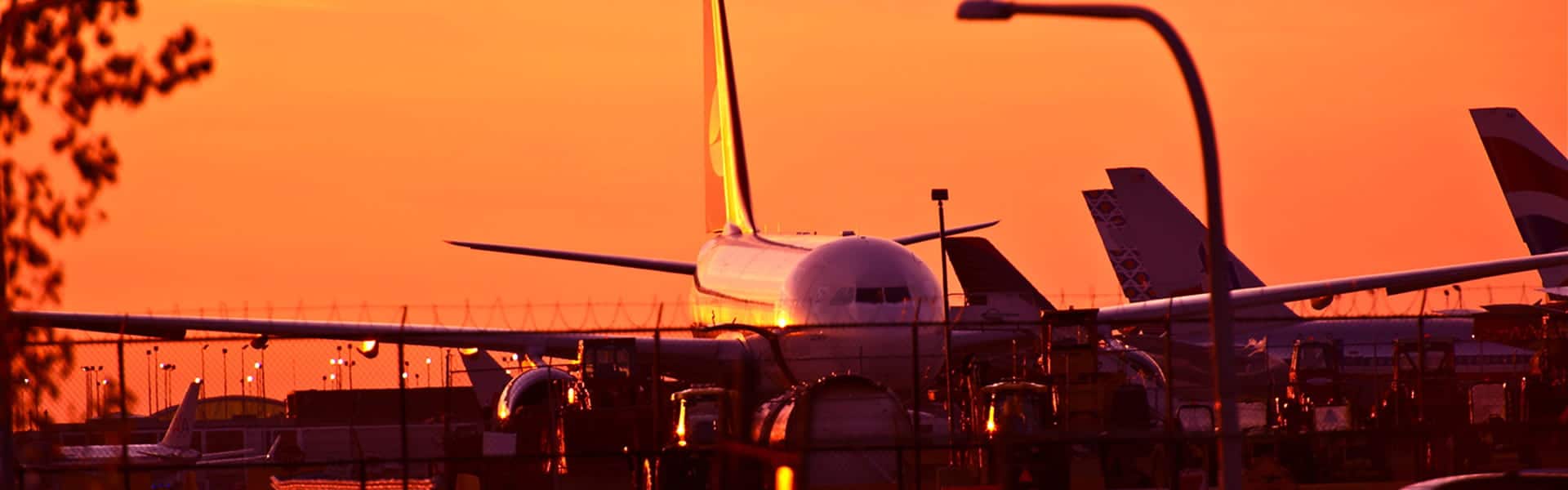
By the time the first August weekend lands at Nice, the airfield is already at parking capacity, slot coordinators are turning down late requests, and the FBO fuel queue is running ninety minutes deep. Crews are tight on duty. Owners are calling with schedule changes. Somewhere over central Europe, a thunderstorm is rerouting half the traffic to the south coast.
Summer in business aviation is not a quieter season with longer days. It is the most operationally compressed window of the year, and the operators who get through it cleanly are the ones who planned for it in May.
This summer flight operations guide is for the people running the trip when it matters. Schedulers, dispatchers, ops managers, charter brokers, and flight departments. It covers what tends to go wrong, where the real constraints sit, and how to plan a peak season trip that holds together when something slips.
Why summer peaks disrupt operational plans
European business aviation movements peak between June and September. Mediterranean fields handle roughly a year’s worth of demand in twelve weeks. The constraints are not new, but they compound in a way they do not the rest of the year.
A slot misses by twenty minutes. The fuel queue eats the recovery margin. Parking has gone to a flight already in the air. Crew duty tightens. The cost of one weak link rises sharply in peak season, and the chain has more links than most operators plan for.
The operators who hold up cleanly through August are the ones who built that planning in May.
Slot coordination and PPR at peak destinations
Slots are the single biggest source of summer disruption for business aviation.
Nice (LFMN)
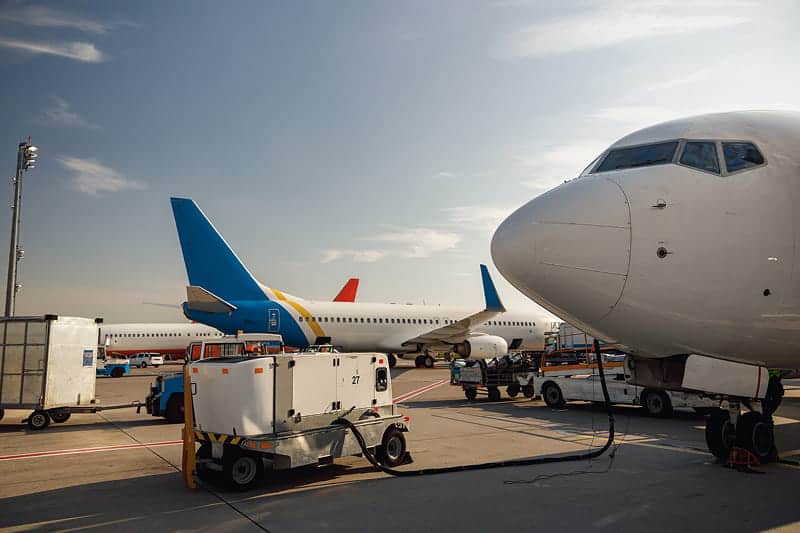 PPR at Nice is confirmed one week before arrival, not earlier. Slots can only be requested inside that seven-day window.
Operators who plan for a four-week confirmation horizon are working against the system. The right approach is to lock the schedule, request inside the window, and accept that confirmation comes late. Any schedule change cancels the PPR automatically. A new request goes back in the queue.
The single most common failure at Nice in August is an owner moving the departure inside the PPR window, the parking dropping, and the aircraft repositioning on the day of operation. A quick turn of under three hours is always accepted at Nice.
This is the workable answer for trips where the passengers want the Riviera but the aircraft does not need to stay. Drop the passengers, reposition the aircraft to Cannes, La Mole or Toulon, return for pickup.
Long-term parking at Nice is charged on an escalating scale. For trips longer than a couple of nights, repositioning is usually cheaper than staying.
Cannes Mandelieu (LFMD)
Cannes is not a 24-hour field. Standard hours are 0800 to 2000 local, extended in summer to 0800 to sunset plus 30 minutes, with the latest possible operation at 2230 local. No overtime. If the trip lands after the curfew, it does not land. Slots and PPR are required during the Cannes Film Festival window with a deviation tolerance of plus or minus 20 minutes.
Toulon Hyeres (LFTH)
Toulon is a military field. PPR is required for all operations, with minimum lead times of four hours for domestic French flights, 24 office hours for intra-Schengen, and 48 office hours for non-Schengen. The GAT operating window matters. Parking is first come first served and scheduled commercial traffic has priority.
For Saint-Tropez trips, Toulon is the underused answer. Drive time to Saint-Tropez under ideal conditions is 46 minutes to an hour. During August peak it can stretch to ninety minutes or two hours, which needs to be in the crew brief.
The French Solidarity Tax
Introduced in March 2025, the French Solidarity Tax applies to commercial non-scheduled flights departing French soil. It does not apply to private, non-revenue operations. For commercial charter operators, charges vary by aircraft category and destination band: turboprop aircraft run from €210 to €1,025 per passenger, while turbojet aircraft run from €210 to €2,100 per passenger, with long-haul turbojet operations carrying the highest exposure. It is a meaningful cost line and should be in the quote before the trip is sold, not after.
For complex coordinated trips into the Riviera, flight planning needs to start with the parking question, not the route.
Overflight permits across summer routes
Eastbound traffic to the Med, Turkey, Egypt and the Gulf brings permit complexity that varies more than most operators plan for.
Turkey
Worth flagging because Turkey is widely misunderstood. Private and non-commercial general aviation flights registered in any of the 139 bilateral agreement states do not require a Turkish overflight permit. For flights that do need a permit, the lead time is 48 working hours and the validity window is minus 24 plus 72 hours from the requested schedule. Turkey CAA working hours are 0600Z to 1400Z.
Cargo flights to Libya, Iraq, Syria, Armenia and Cyprus require Turkish overflight permits regardless of bilateral status. The Turkey/Israel position requires specific attention for summer 2026. Since August 2025, Turkey has banned Israeli government aircraft and flights carrying weapons to Israel from its airspace. The ban does not apply to transit commercial flights, but the political situation remains active and permit agents are reporting a more scrutinised approval environment for any Israel-related routing.
Any trip involving Israeli-registered aircraft, flights to or from Israel, or Israeli passengers on charter manifests should be checked with a permit specialist before the trip is planned, not on the day of departure. Do not assume the pre-2025 approval framework still applies.
Lead times across the region
Egypt is one of the most straightforward permits in the region, typically processed within 24 hours and often achievable in 12. Saudi Arabia generally runs to 72 hours. Libya is a permit-and-security question, not a pure permit question, and lead times are longer and less predictable. Russian airspace remains closed to most operators.
Build the longest lead time on the route into the planning clock, not the average. Schedule slips that push outside a permit validity window require revalidation, and the rules vary by state.
For trips with permit complexity, working with a partner that handles overflight permits in-house removes a layer of risk.
Weather, hot and high performance, and fuel reserves
Summer atmospherics meet aircraft performance in ways that quietly rewrite trips.
Convective weather patterns to know
The afternoon CB build-up over the Alps catches northbound traffic out of the Med between roughly 1300 and 1900 local through July and August. Plan northbound legs for the morning where the schedule allows. The Etesian winds at Greek island airfields, particularly Mykonos and Naxos, drive strong crosswinds through July and August that can put runway limits in play for the lighter end of the bizav fleet. Saharan dust events affect visibility into Mediterranean fields, particularly the Italian and Greek south coasts, in late summer.
Fuel reserves need to be built for the route as it will be flown, not the route as it was filed. ATC flow restrictions during convective events push holding and reroutes that a brochure-reserve flight plan will not absorb.
Hot and high performance
High ambient temperatures reduce engine thrust and aerodynamic lift. Combined with high-elevation fields, the maths starts to bite. Innsbruck, Sion, Samedan, Saint-Moritz, Bolzano and Aspen all feature in summer Riviera-to-Alps trips. Payload restrictions, longer runway requirements, and unplanned fuel stops all come into play.
This is the kind of detail a complete summer flight operations guide has to land properly. The maths is not new. The pressure to ignore it is, particularly when the owner wants to take more passengers than the temperature allows.
Fuel uplift, SAF availability, and what to expect at peak FBOs
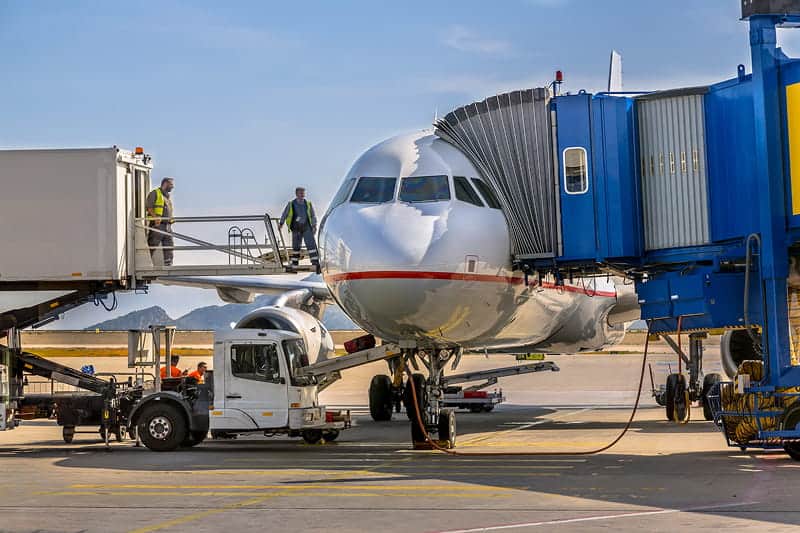 Fuel is where summer plans meet real-world friction.
Peak demand creates fuel truck queues at busy FBOs. A turnaround that allows ninety minutes can stretch to two and a half hours if uplift is not pre-arranged. Pre-booked uplift beats turning up and hoping. SAF availability across European business aviation fields remains uneven. The UK SAF Mandate sits at 3.734% for 2026, rising under a published trajectory to approximately 10% by 2030 and 22% by 2040.
EU ReFuelEU Aviation imposes a 2% blending obligation on suppliers at EU airports through 2025 to 2029, rising to at least 6% by 2030. These are supplier obligations on total fuel supply, not a guarantee that SAF is in the truck at the field on the day. At smaller bizav fields, physical SAF supply remains limited and pricing varies significantly by location.
For operators with sustainability commitments, the practical answer is to confirm SAF availability and pricing at the planning stage. Our smarter approach to fuel procurement blog covers this in more detail, and the Fuelworx network is built around the comparison and coordination that peak season demands. For operators managing fuel across multiple trips, the fuel portal takes the back-and-forth out of pricing.
Crew FTL and the trips that look fine on paper
Crew flight time limitations are the hidden risk in owner-driven schedules.
A two-crew owner trip on a Citation Latitude. London Farnborough to Nice on Friday morning. Nice to Olbia on Saturday. Olbia to Mykonos on Sunday. Mykonos to Athens on Monday. Athens back to Farnborough on Tuesday. On paper, five sectors over five days. Manageable. In practice the owner moves the Saturday Olbia leg to a late afternoon departure, which pushes a 1700 local takeoff and an arrival into Olbia that compresses the Sunday morning Mykonos slot.
The Sunday sector then runs into the Etesian crosswind window. By Monday the crew has had two short overnights and a long duty day. By Tuesday the Athens to Farnborough sector is breaching FTL under Subpart FTL if the schedule slips by more than ninety minutes.
The fix is in the planning. Either positioning crew to operate the Tuesday return, or building the schedule to land Athens to Farnborough on a fresh duty start. Augmented crew works for some operations and not others. The trip that looks fine on Monday is the trip that breaks on Thursday.
Owner schedule changes are the single biggest FTL pressure in summer. Crew travel coordination, including last-minute rebooking and accommodation across multiple Mediterranean fields, is part of what keeps these trips operational rather than theoretical.
Diversion intelligence for the French Riviera
When Nice has no parking, the question is which alternates actually work.
- Cannes Mandelieu (LFMD) is the closest answer but is curfewed and has no overtime. Workable for morning and afternoon ops, not for late arrivals.
- La Mole (LFTZ) at Saint-Tropez has length limits that rule out most of the larger bizav fleet. Useful for light and midsize jets, not for heavy iron.
- Toulon Hyeres (LFTH) is the underused answer. Longer ground transfer, more flexible PPR rules, and military field protocols that work cleanly when handled properly.
- Marseille Provence (LFML) is a 24-hour AOE with no PPR. Fewer than 10 parking spots in front of the GAT, but it is the most operationally flexible alternate on the Riviera coast.
- Genoa or Albenga in Italy, depending on direction, are worth holding in the back pocket for trips where Mediterranean weather is moving.
The point is not to memorise the field list. It is to have the alternate decided ahead of time, with the handling pre-arranged, the parking question pre-asked, and the ground transfer logistics in the trip file. Reliable ground handling coordination at both the destination and the alternate is what makes an alternate a real option rather than a name on the flight plan.
Where outsourced flight support changes the risk profile
Business aviation runs in cycles. The current phase has more operators bringing dispatch and ops in-house, which works well in the shoulder months and shows its limits in July and August.
Peak season is when in-house capacity hits its ceiling. The ops team that ran cleanly in April is suddenly handling double the trip volume with the same headcount, the same desks, and the same eight-hour shifts. Outsourced trip support absorbs the spike without forcing the operator to carry year-round capacity that sits idle in February. There is a fuller discussion of the trade-off in our piece on outsourcing vs in-house flight operations.
A 24/7 ops centre during a disruption does the work that keeps a diverted trip from becoming a missed one. When a CB cell sits over Northern Italy and the routing home from Olbia stops working, the desk handles revised flight plan filing, alternate coordination, fuel arrangement at the new field, crew duty recalculation, ground handling rebooking and passenger communication. The work that turns a divert into a recovery.
What separates a clean summer from a chaotic one
Summer rewards the operators who treat May and June as planning months, not preparation months. The constraints are knowable, the friction is named, and most of the costly mistakes are repeatable.
Lock the schedule before requesting PPR at Nice. Build permit lead times around the slowest state on the route, not the average. Plan fuel reserves for the weather you will actually fly through. Watch crew duty as owner schedules drift. Have an alternate that is more than a name on the flight plan.
Flightworx exists for this. Permits, fuel, slots, handling, crew, and a 24/7 ops centre that does not stop when the weather does. If summer is the season that tests your operation, get in touch before it starts.
